What to Do If You Crack a Tooth and Need an Emergency Dentist
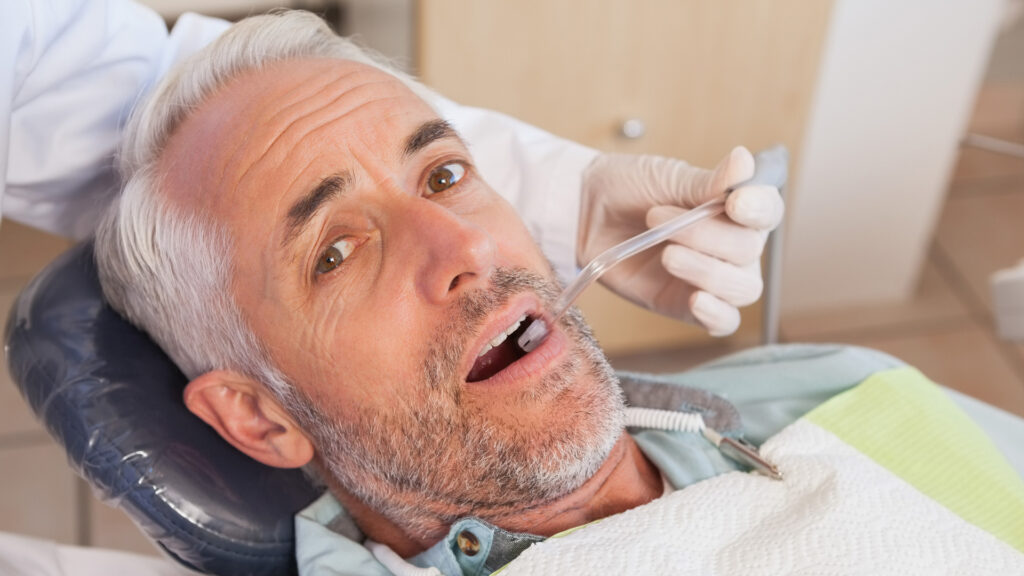
A cracked tooth has a way of changing the day in an instant. One moment you are biting into toast, chewing ice without thinking, or taking a hit during a weekend game, and the next you feel a sharp edge, a jolt of pain, or that sickening awareness that something is no longer right in your mouth. Some cracks are obvious. Others are sneaky. You may not see much in the mirror, yet every sip of cold water sends a signal that gets your full attention.
This is one of those dental problems people often underestimate at first. They hope it is minor, rinse with warm water, avoid chewing on that side, and tell themselves they will deal with it after work or after the weekend. Sometimes that delay does not change much. Sometimes dentalgroupbh.com Emergency Dentist it turns a manageable repair into a root canal, an extraction, or a swelling that could have been avoided. Knowing what to do in the first hour matters.
If you think you have cracked a tooth, the goal is simple. Protect the tooth, control discomfort, and get assessed quickly by an Emergency Dentist. Not every crack needs treatment within minutes, but many do need same day or next day attention. Teeth do not heal the way skin or bone does. Once a crack forms, it can deepen under pressure, bacteria can enter, and the options can narrow.
How to tell whether you have actually cracked a tooth
People use the phrase "cracked tooth" to describe several different problems. A tiny chip on the edge of a front tooth is very different from a deep fracture in a molar. Both deserve evaluation, but the urgency and treatment can be completely different.
A true crack often causes pain when biting down or, more specifically, when you release the bite. That detail is useful. Patients sometimes describe it as a quick, stabbing sensation that appears and disappears. Temperature sensitivity is also common, especially with cold drinks. Some people notice a rough or sharp area with their tongue. Others feel as though the tooth is flexing, even when nothing looks dramatic.
Not every crack is visible to the naked eye. Dentists routinely see cases where the tooth looks almost normal in a bathroom mirror, yet under magnification, staining, transillumination, or bite testing, the fracture becomes clear. Molars are especially good at hiding trouble because many cracks run along grooves or under old fillings.
The cause is often less mysterious than people think. Hard foods are a classic trigger, but long term grinding, clenching during stress, large fillings that weaken the remaining tooth structure, old dental work, sudden trauma, and temperature extremes can all play a role. I have seen patients crack teeth on popcorn kernels, crusty bread, olive pits, cough drops, and even by biting down on a fork during a rushed lunch. It does not always take a dramatic accident.
The first hour matters more than most people realize
A cracked tooth is not always a screaming emergency, but it is never something to ignore. The first question is whether this is a minor structural problem or a sign that the nerve, root, or surrounding tissue may be involved. That distinction is not something most people can make accurately at home. What you can do is reduce the risk of making it worse while you arrange professional care.
Here is what to do right away:
- Rinse your mouth gently with warm water to clear away blood, debris, or food particles.
- Stop chewing on that side immediately, and avoid hard, sticky, or very hot and very cold foods.
- If there is swelling, apply a cold compress to the outside of the face for short intervals.
- Take an over the counter pain reliever if you can use it safely, but do not place aspirin directly on the gums or tooth.
- Call an Emergency Dentist and describe the symptoms clearly, including pain, swelling, bleeding, and whether a piece of tooth broke off.
Those steps sound basic, but they prevent a lot of avoidable worsening. The instinct to keep testing the tooth is common. People tap it with a fingernail, bite gently to "see if it still hurts," or run their tongue over the sharp area every few minutes. That repeated pressure can extend a fracture line. Once you suspect a crack, leave it alone as much as possible.
If part of the tooth has broken off and you can find the fragment, keep it clean and bring it with you. It cannot always be reattached, but sometimes it helps the dentist understand the pattern of the break. If the broken area is sharp enough to cut your tongue or cheek, a small piece of sugar free chewing gum or temporary dental wax from a pharmacy can cover the edge for a few hours. That is a temporary measure, not a fix.
When a cracked tooth becomes a true dental emergency
There is a difference between "this needs attention soon" and "this should not wait." People are often unsure where their situation falls. A reliable rule is this: pain, swelling, bleeding, visible fracture, and changes in the way your bite fits together all push the problem toward urgency.
Call an Emergency Dentist as soon as possible if the pain is strong, throbbing, or getting worse. The same goes for swelling in the gums, face, or jaw. Swelling can mean infection or inflammation around the root, and that can escalate quickly. If you notice a bad taste, drainage, or a pimple like bump on the gum, those are also signs that infection may be involved.
Another urgent pattern is a crack caused by trauma. If you fell, got hit in the mouth, or were in a car accident, there may be damage below the gumline or injury to nearby teeth that is not obvious. A tooth can be cracked, loosened, displaced, or internally damaged even when the visible chip looks small. If your bite suddenly feels "off," that is worth prompt evaluation.
You should also seek quick care if the tooth is split enough that part of it moves. Mobility suggests a more serious fracture. At that point the question is often whether the tooth can be stabilized and restored, not just smoothed or filled.
What not to do while you wait
Most cracked teeth get worse from pressure, not from time alone. That is why self treatment can backfire. I have seen patients do more damage by trying to be practical than by the original bite that caused the crack.
Do not chew on the injured side, even if the pain settles down. Do not test hard foods to see if the tooth is "back to normal." Do not use super glue, household cement, or internet remedies to stick a fragment in place. These materials are not made for oral tissues, and they complicate treatment. Do not ignore a crack simply because you are not in pain. Pain is an important clue, but some deep fractures are surprisingly quiet until they are not.
If a crown came loose and the tooth underneath seems cracked, do not force the crown back on unless your dentist specifically guides you. A crown that seats incorrectly can put damaging pressure on the tooth or trap bacteria and debris against sensitive areas.
Why some cracks hurt only when you bite
This is one of the more confusing features of cracked teeth. Patients often say, "It only hurts for a second, so maybe it is not serious." That short, sharp pain often happens because the crack opens microscopically under biting pressure and then closes when you release. Fluid movement inside the tooth stimulates the nerve. The tooth may not ache constantly, but the structure is compromised all the same.
Think of a ceramic tile with a hairline fracture. It may stay intact for a while, but repeated loading makes the weak line more likely to spread. Teeth behave similarly, except they also house living tissue. That is why dentists tend to take even intermittent symptoms seriously, particularly in molars with large old fillings.
Grinding is a common hidden factor here. A patient may come in convinced the crack happened from one hard bite, yet the tooth has probably been under heavy nightly stress for months or years. The final crunch was just the moment the damage became noticeable.
What an Emergency Dentist will look for
When you arrive, the exam is usually more detailed than people expect. The dentist is not just confirming that the tooth is broken. They are trying to answer several practical questions. How deep is the crack? Is the nerve affected? Does it extend below the gumline? Is the root involved? Can the tooth be saved predictably, or would treatment be temporary at best?
That workup may include x rays, bite tests, gentle probing around the gums, temperature testing, and close visual inspection under magnification. X rays do not always show a crack clearly, especially if the fracture line runs in a certain direction, but they can show related problems such as deep decay, bone loss, or changes around the root tip.
Patients are often surprised when the dentist says a small visible chip is not the main issue, or that a tooth with little visible damage actually has a poor prognosis. Cracks are three dimensional problems. What you can see on the outside is only part of the picture.
The immediate treatment depends on what the dentist finds. In some cases, smoothing a sharp edge and placing a bonded filling is enough. In others, the tooth needs a crown to hold it together and protect it from further splitting. If the nerve is inflamed or infected, root canal treatment may be necessary before the tooth can be restored. If the crack extends too far below the gumline or down the root, extraction may be the most predictable option.
Common treatments, and why the plan can vary
A lot of patient frustration comes from hearing that a cracked tooth "might" need different things depending on symptoms and depth. That uncertainty is real. Dentistry is not being vague in those moments, it is reflecting how cracked teeth behave.
A minor chip on the corner of a front tooth can often be repaired with bonding in one visit. A cracked cusp on a back tooth may need a new filling or, more often, a crown because molars take heavy force. A tooth with a vertical crack into the nerve chamber may be restorable, but only after root canal treatment and full coverage with a crown. A split tooth, where segments move independently, has a much worse outlook.
Sometimes an Emergency Dentist will place a temporary protective restoration first and reassess symptoms later. That approach is common when the crack is suspected but not fully visible, or when the tooth is very inflamed and the team wants to stabilize it before making a final decision. Patients sometimes hear this and worry the dentist is uncertain. More often, it is a sign of careful judgment.
The important thing is not to assume that no severe pain means no severe damage. Some teeth remain quiet until the crack reaches the pulp, and by then the treatment is more involved.
Pain control at home, realistically
Over the counter pain medication can help while you wait to be seen, but it has limits. It can reduce inflammation and dull pain, yet it will not stop the crack from propagating. If the tooth is temperature sensitive, room temperature water and softer foods are usually more tolerable than very cold drinks or hot coffee. Many people can get through the next several hours by avoiding pressure and keeping the area clean.
What often makes pain spike is not random. Biting on hard food, clenching, and repeated temperature swings are common triggers. That is why the blandest advice, avoid chewing there, works surprisingly well.
If the gum around the tooth is sore or cut by a sharp edge, saltwater rinses can be soothing. Mix it mild, not strong enough to sting. If swelling starts to build, or pain becomes constant and throbbing, the situation has changed and should be updated when you call the office.
The question almost everyone asks: can the tooth be saved?
Often, yes. Not always.
Teeth with superficial chips or cracks limited to the crown can frequently be restored well, especially if they are treated before the fracture deepens. Teeth with deeper cracks that involve the pulp may still be saved with root canal treatment and a crown. The harder cases are vertical root fractures, deep subgingival splits, and teeth where the crack divides the tooth into segments.
Prognosis also depends on where the tooth sits in the mouth and how much force it handles. Back teeth do harder labor than front teeth. A molar that has already had a large filling, years of grinding, and then develops a deep crack has less structural reserve than a previously healthy premolar with a small cusp fracture.
One of the more difficult conversations in emergency care is when a tooth can technically be treated, but the long term outlook is guarded. Some patients prefer to try to keep the tooth if there is a reasonable chance. Others would rather remove it and move toward an implant or bridge instead of investing in treatment with uncertainty. Neither choice is automatically right. Good emergency dentistry is not just about fixing the immediate break, it is about matching the plan to the biology, the symptoms, and the patient’s priorities.
If you are traveling, after hours, or cannot get in right away
This happens more often than people expect. Cracks rarely respect office schedules. If your regular dentist is closed, look for an Emergency Dentist who handles same day urgent care and explain that you may have a cracked tooth, not just "tooth pain." The distinction helps the office triage your case more accurately.
If you are traveling, take a clear photo if the fracture is visible, note when the pain started, and be ready to describe what triggers it. Does it hurt with cold, with biting, constantly, or only when chewing? Is there swelling? Has a piece come off? That information helps the receiving office decide how quickly you should be seen.
If the pain is accompanied by significant facial swelling, fever, difficulty swallowing, or trouble opening your mouth, do not treat it as a routine scheduling issue. Those symptoms can point to infection spreading into spaces that need prompt medical attention.
Costs, timing, and why delay can get expensive
People sometimes postpone care because they fear being pushed into major treatment. That concern is understandable. Emergency visits can feel rushed and stressful. Still, cracked teeth are one of the clearest examples in dentistry where delay often raises the cost.
A tooth that could have been protected with a crown may later need a root canal and crown. A tooth that might have been saved may become unrestorable. That does not mean every crack worsens overnight, but enough do that waiting is a gamble. From a practical standpoint, a prompt exam usually buys you options.
The visit itself is usually diagnostic first. Even if definitive treatment cannot be completed that same day, you often leave with a clearer picture, pain control, and a temporary measure that protects the tooth. That alone can change the week dramatically.
How dentists try to prevent the next crack
Once someone cracks a tooth, it is worth asking why it happened. Sometimes the answer is simple, a hard object and bad luck. Just as often there is a pattern that can be addressed.
These are the risk factors dentists commonly revisit after emergency treatment:
- Night grinding or clenching, especially if you wake with jaw soreness or headaches.
- Large old fillings that leave thin tooth walls behind.
- Chewing ice, hard candies, popcorn kernels, or similar hard foods.
- A bite that puts excessive force on one tooth or cusp.
- Delay in restoring weakened teeth that already show wear lines or fractures.
This is where follow up matters. The emergency repair gets you out of trouble. The preventive plan keeps you from coming back with the same problem on another tooth six months later. For many adults, a custom night guard is one of the best investments after a crack related to bruxism. It does not make teeth indestructible, but it reduces the relentless force that quietly damages them over time.
The emotional side of sudden dental damage
A cracked tooth can feel disproportionately upsetting, and that reaction is normal. Teeth are tied to appearance, eating, speech, and day to day comfort. Sudden dental pain also has a way of making people feel cornered. They worry about the cost, the possibility of losing the tooth, whether they can work the next day, whether the swelling will show on their face.
A calm assessment helps. Most cracked teeth are not life threatening emergencies, but they are time sensitive dental problems. The right response is not panic. It is prompt action. Protect the tooth, manage the pain sensibly, and get seen by an Emergency Dentist who can determine whether you need a simple repair, a crown, root canal treatment, or something more extensive.
If there is one practical takeaway, it is this: do not let a "maybe it will settle down" mindset make the decision for you. Cracked teeth rarely improve on their own. Early care preserves options, and options are what you want when something important breaks.
Dental Group Of Beverly Hills
8641 Wilshire Blvd #125, Beverly Hills, CA 90211, United States
+1 310-929-6335
FAQ About Emergency Dentist
What is considered to be a dental emergency?
Severe tooth pain, a knocked-out permanent tooth, uncontrolled bleeding, or a suspected dental infection can require urgent assessment. Contact a dentist promptly to describe your symptoms and arrange appropriate care. Trouble breathing or swallowing, rapidly spreading swelling, or a serious facial injury requires emergency medical attention; call 911 or go to an emergency department.
How to tell if tooth pain is serious?
Tooth pain needs prompt dental assessment when it is severe, persistent, disrupts sleep, or occurs with swelling, fever, pain on biting, or a bad taste. Symptoms alone cannot establish the cause, and an examination may be needed. Seek emergency medical care for breathing or swallowing difficulty, swelling affecting the eye or neck, or other signs of a rapidly worsening infection.
What are the red flags of a tooth infection?
Warning signs include facial or gum swelling, fever, worsening pain, pus or a bad taste, and difficulty opening the mouth. A dental abscess does not reliably resolve on its own and needs urgent dental care. Difficulty breathing or swallowing, rapidly increasing swelling, or eye involvement can indicate a dangerous complication and warrants immediate emergency medical care.